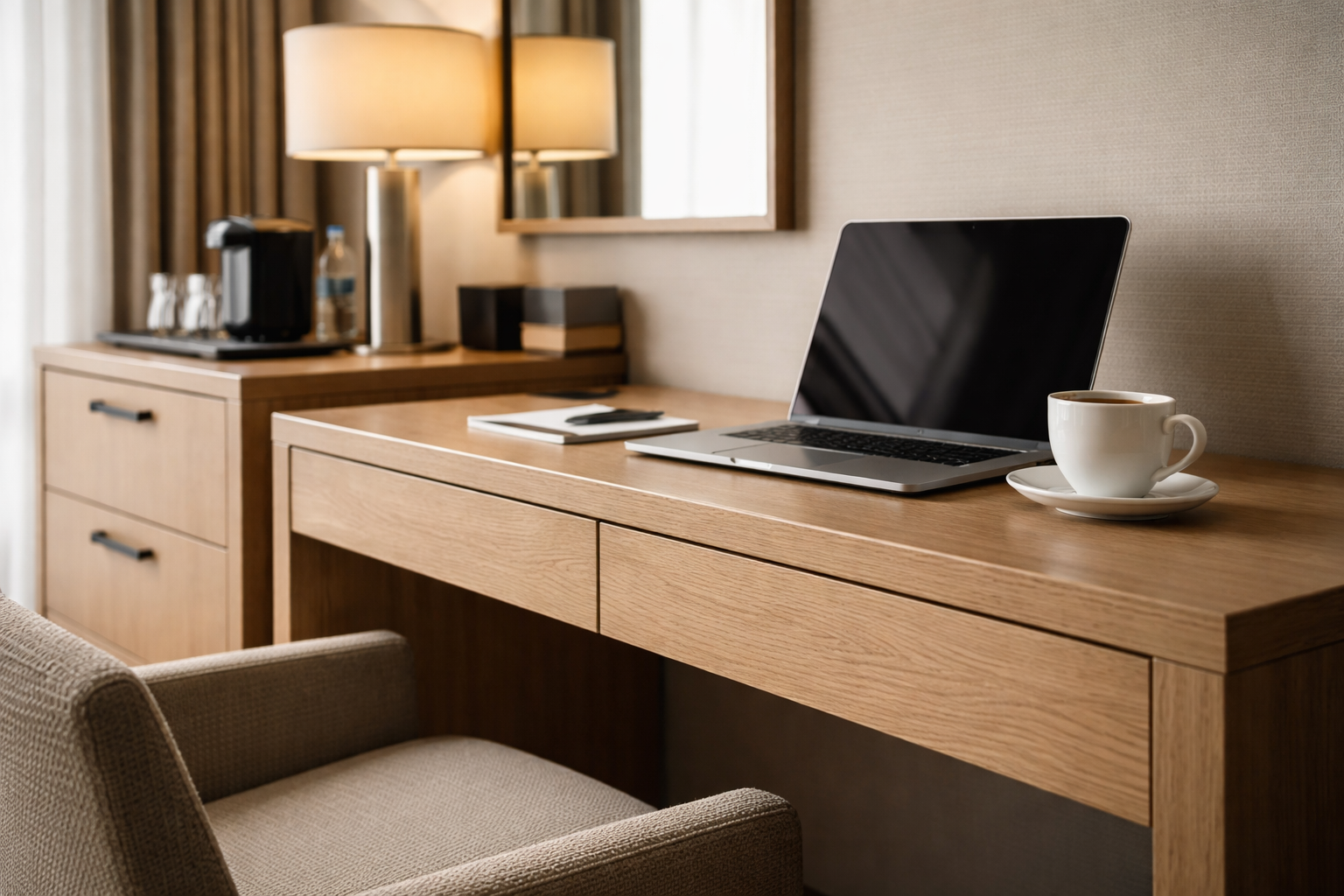
By the time you’re choosing furniture, you’re usually already tired. Deadlines are close, everyone has an opinion, and somehow the conversation lands on hospitality casegoods like they’re a small detail, when they really aren’t. But these are the things guests live with, even if they never talk about them. Drawers get opened half-asleep, desks collect laptops, coffee cups, bags, sometimes frustration. Outdoor hotel furniture doesn’t get any mercy either. Heat, rain, dust, awkward layouts, it all shows up fast. Toward the end of the process, it stops feeling like design and starts feeling like judgment calls.
You think back to what broke last time, what was a pain to replace, what looked great but aged badly. That’s usually when the real thinking kicks in. Not “does this look impressive,” but “will this still make sense a year from now.” The best choices don’t come from excitement. They come from a quiet pause, a bit of honesty, and choosing what won’t cause problems later, even if no one ever compliments it.
What Are Hotel Casegoods and Outdoor Hospitality Furniture?
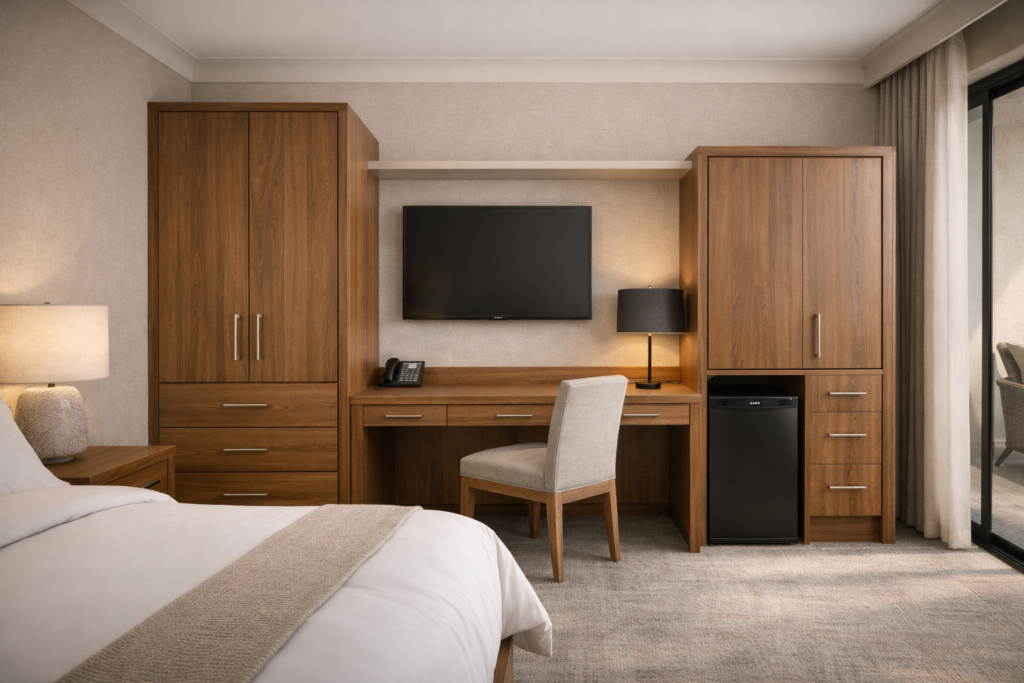
Hotel casegoods is one of those terms people keep using in meetings, but on site it’s much simpler. It’s the fixed stuff in a room. Beds, desks, wardrobes, drawers, side tables. The boring basics, basically. Guests don’t notice them when they’re good. They only notice when something feels off. A drawer that jams. A desk that wobbles. A wardrobe door that never quite shuts right. That’s when it becomes a problem. These pieces aren’t there to impress anyone. They just need to hold up, day after day, with different guests treating them in different ways.
Outdoor hotel furniture is less forgiving. Chairs, tables, loungers, balcony setups, they live outside and take it all. Heat, rain, dust, rough handling. People move chairs without thinking, spill drinks, leave towels, stack things wrong.
In the end, both are doing the same job. Helping the hotel function without creating extra issues. If they work, nobody says a word. If they don’t, you hear about it fast.
Durability and Material Quality in Commercial Hotel Furniture
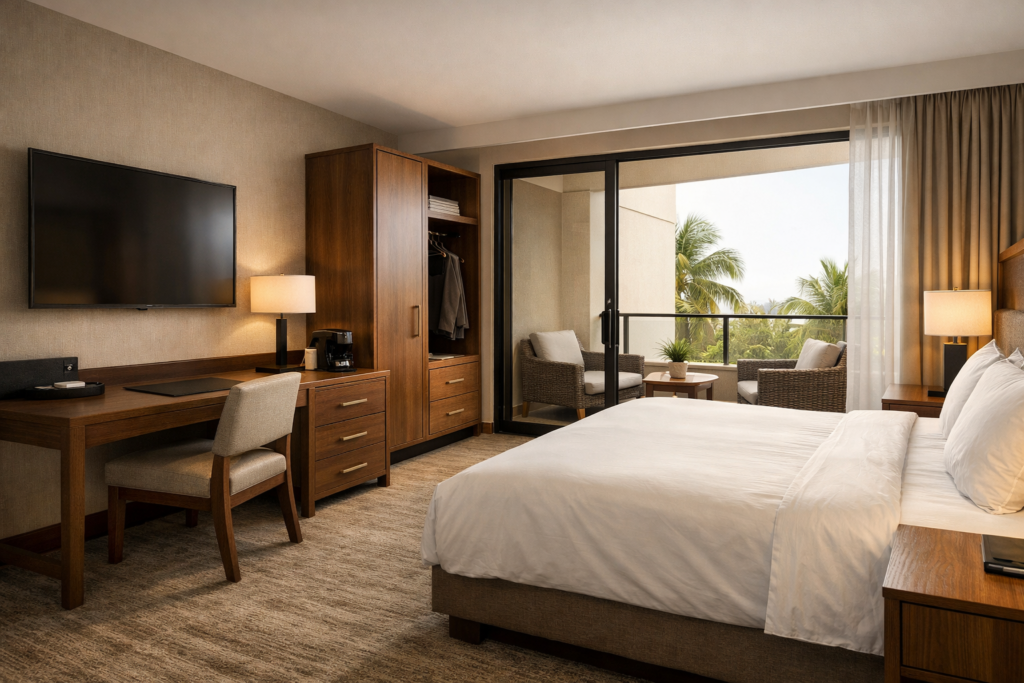
Durability only sounds boring until you’re the one dealing with broken furniture. In a hotel, nothing gets used gently. Guests lean back on chairs, sit on desks, drag tables instead of lifting them. Housekeeping wipes everything down, again and again, sometimes a little harder than planned. After a few months, that’s when you see what was really built well and what just looked fine on day one.
Material quality matters because weak stuff gives up early. Finishes start peeling, edges swell, screws loosen, and suddenly one small issue turns into a room you can’t sell. Better materials don’t make furniture bulletproof. They just hold their shape longer and fail slower, which honestly is all you’re asking for.
At some point, durability becomes about peace of mind. Fewer calls, fewer temporary fixes, fewer “we’ll deal with it later” moments. When furniture stays out of the way and doesn’t create work, that’s when you know the materials were chosen for real use, not just for a catalog photo.
Safety, Compliance, and Industry Standards for Hospitality Furniture
Safety and compliance usually sit in the background, until they don’t. Most days, no one is thinking about weight limits or fire ratings. They’re thinking about check-ins, turnovers, complaints. But one loose chair, one sharp corner, one unstable table, and suddenly it’s everyone’s problem. In a hotel, furniture gets used by kids, tired travelers, people who lean, sit wrong, or don’t look where they’re going. That’s just reality.
Standards exist because something went wrong somewhere before. They’re not written for fun. Load tests, fire rules, spacing guidelines, material approvals, all of it comes from past mistakes. Skipping these steps usually feels fine at first. Then a chair tips, someone gets hurt, or an inspection turns uncomfortable.
The funny part is, when safety is done right, nobody notices at all. Guests don’t mention it. Reviews don’t talk about it. But staff sleep easier, problems stay small, and nothing escalates. In the long run, following the rules isn’t about being careful. It’s about avoiding moments that can derail everything over one preventable issue.
Maintenance and Long-Term Cost Efficiency of Hotel Furniture
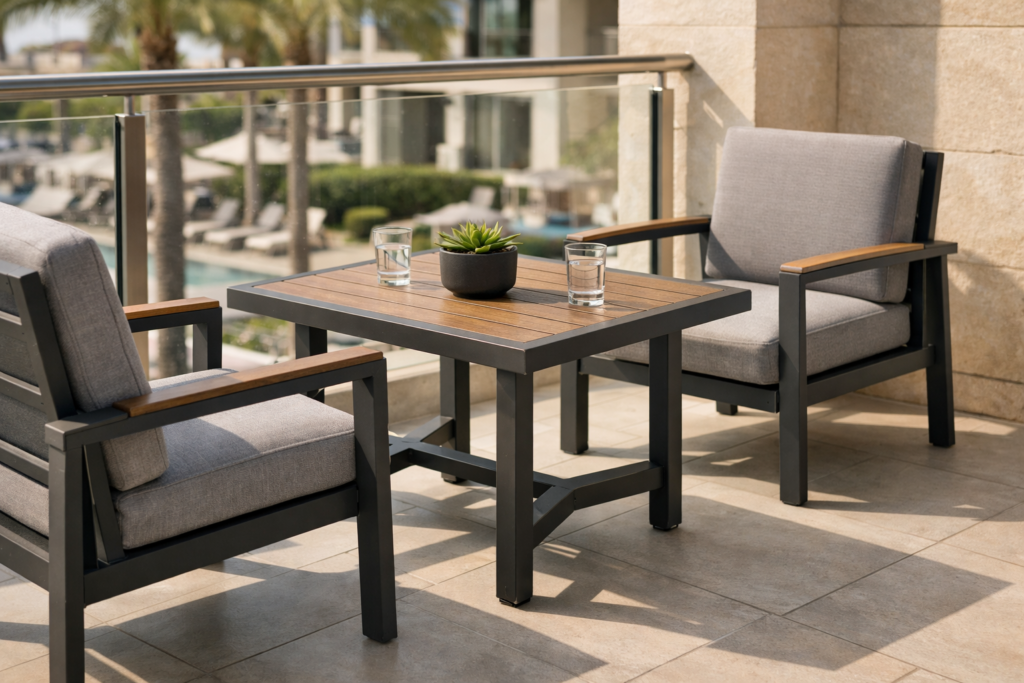
Maintenance is where furniture choices really start to show their true cost. At the start, everything looks fine. Clean surfaces, tight joints, no complaints. Then a few months pass. Housekeeping is wiping things down daily, guests are spilling drinks, dragging chairs, leaning where they shouldn’t. That’s when some pieces start asking for attention way too often.
Long-term cost isn’t just the price on the invoice. It’s the time spent fixing loose screws, touching up damaged finishes, swapping out parts that shouldn’t have failed so soon. One cheap piece that keeps breaking costs more than a solid one that’s left alone. Staff time, out-of-order rooms, small repairs that add up, those things rarely get counted at the beginning.
Good furniture doesn’t ask for attention. It doesn’t create work. Over time, that lack of drama is what really saves money. In a hotel, staying problem-free is often the most cost-efficient choice you can make.
Custom Hotel Casegoods and Space Optimization Solutions
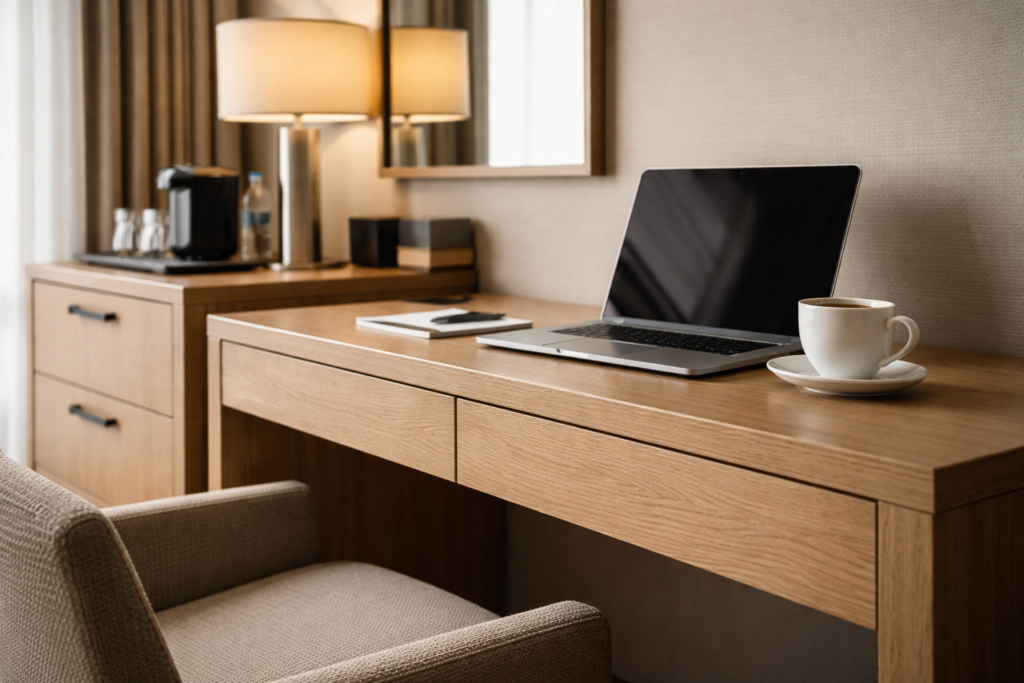
Custom furniture usually isn’t part of the original plan. It shows up later, when you’re standing in a finished room thinking, something’s off. On paper it worked. In real life, the desk feels awkward, the wardrobe opens into the bed, and there’s space, but no one can really use it properly. That’s when custom hotel casegoods stop sounding fancy and start sounding practical.
Hotels are full of small problems no drawing ever warns you about. Walls that aren’t straight. Columns that steal inches. Rooms that look fine until you put real furniture inside them. Standard pieces don’t care about these details. Custom ones do. They’re built to fit the room, not force the room to adjust. Storage ends up where people reach for it. Walkways stay clear. Nothing feels like it’s in the way.
This isn’t about squeezing more into the room. It’s about removing friction. When furniture fits, guests don’t think about it, staff doesn’t fight it, and the room just feels easier to be in. That’s usually the whole point.
How to Choose the Right Hospitality Furniture Supplier
You don’t really choose a hospitality furniture supplier until something goes wrong. Before that, everyone sounds good. Calls get answered fast, samples look fine, timelines seem reasonable. Then the order is placed and reality shows up. A detail needs changing. Delivery gets tight. One item isn’t right. That’s when you learn who actually stands behind their work and who was just good at selling.
The right supplier usually isn’t the smoothest talker. They’re the ones asking slightly uncomfortable questions. How hard the furniture will be used. What failed in your last project. What happens if ten rooms need replacements at the same time. They don’t rush those conversations, and they don’t promise things that feel too easy.
What really matters shows up later. Do they answer when you call? Do they fix problems without blaming everyone else? Do they stay involved once the payment is done? Hotels don’t need perfection. They need to be dependable. A supplier who sticks around, handles issues calmly, and doesn’t turn small problems into big ones is usually worth more than any impressive quote or brochure.
Conclusions
By the time all the decisions are made, furniture usually feels like the last thing anyone wants to think about. But it’s also the stuff that stays long after the project wraps up. Guests use it without thinking. Staff works around it every day. And over time, it quietly shapes how smoothly the place runs.
Hotel casegoods, outdoor pieces, suppliers, materials, none of it works in isolation. One rushed choice has a way of showing up again and again, usually at the worst time. The better choices tend to be the boring ones. The ones that fit properly, hold up under real use, and don’t need constant attention. When talking about suppliers and long-term thinking, reference that many people look at hotel furniture manufacturer companies in USA for reliability, standards, or consistency.
There’s no perfect checklist that guarantees success. Most of it comes down to being honest about how the space will actually be used, not how it looks in drawings. When furniture does its job without creating extra work, that’s usually a sign the thinking was right. No drama, no spotlight. Just things working the way they’re supposed to, day after day.